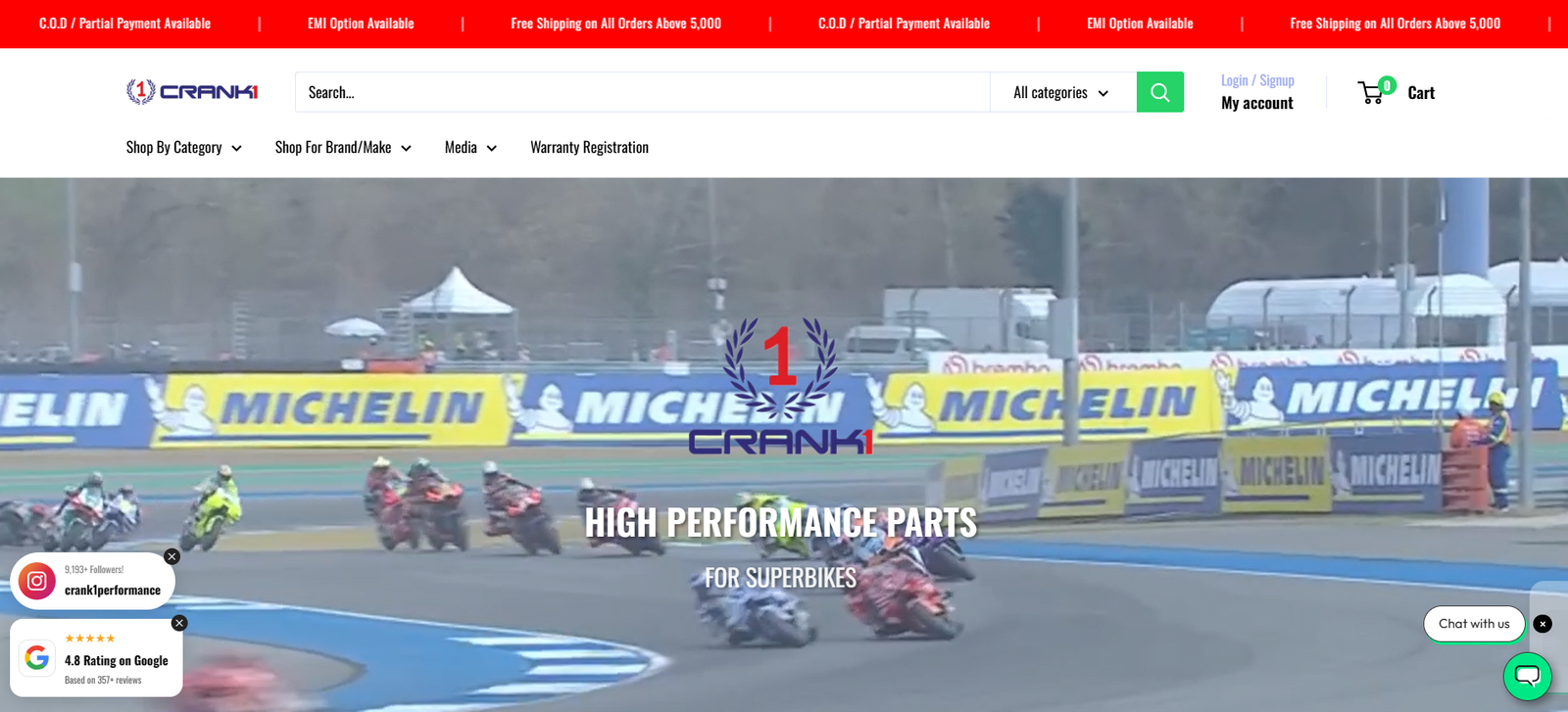
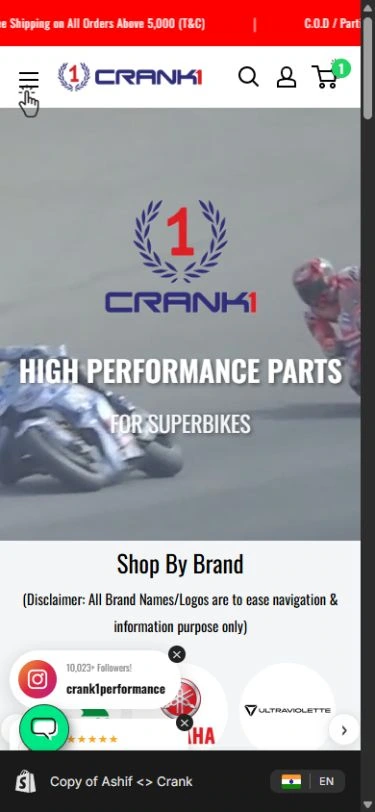
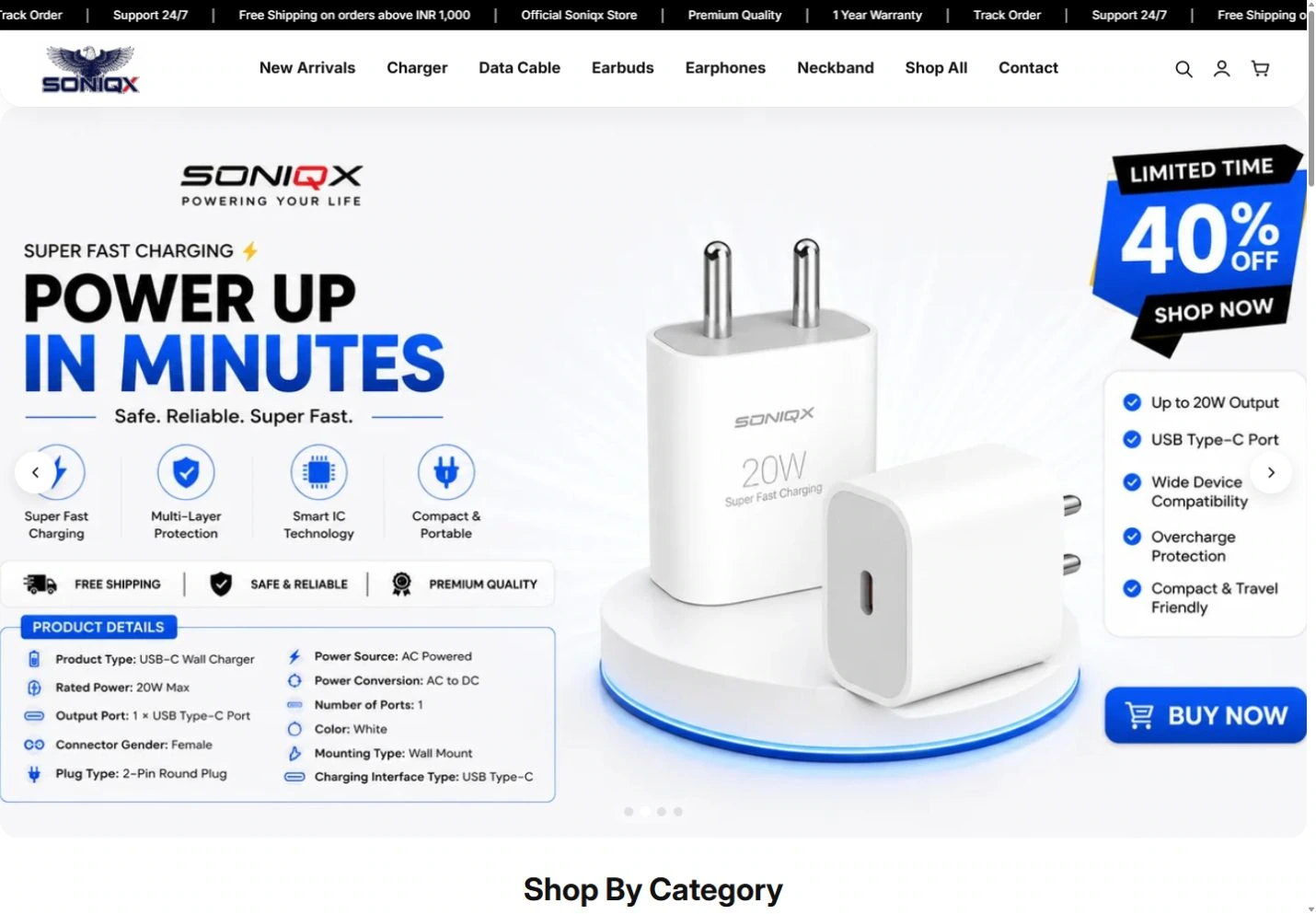
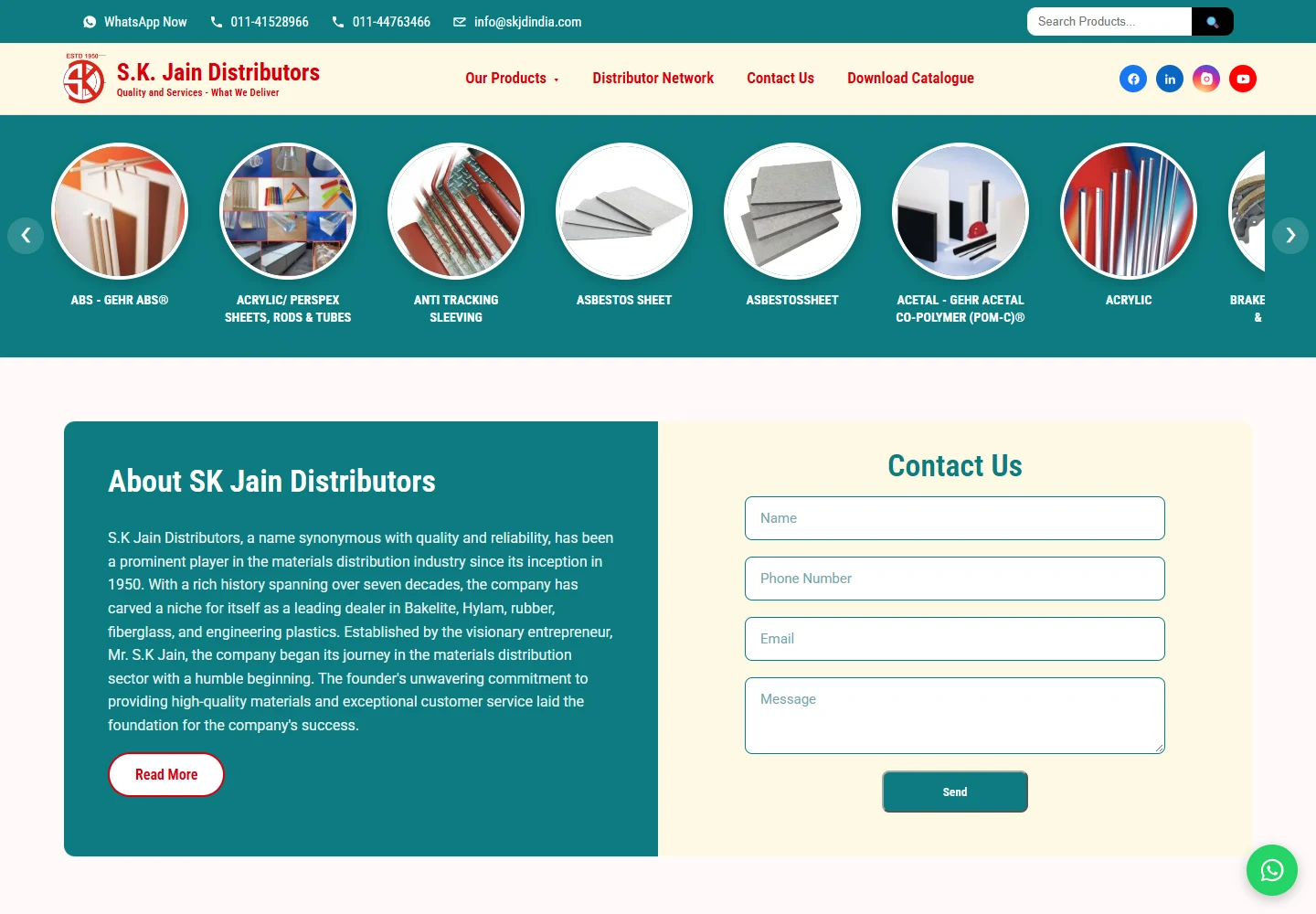
Crank1 Performance appears in EHUB’s portfolio as a motorcycle performance-parts business. The supplied storefront captures combine rider-focused imagery with a product-led ecommerce setting. This case study reviews the presentation and the information needs of a technical buyer, not an independently measured sales or compatibility outcome.
Motorcycle performance identity
Technical product presentation
Desktop and mobile store captures
THE DETAILS THAT MATTER
From first impression to the next step.
01
Introduce the riding context without losing the product
Performance parts are connected to a strong enthusiast culture. Visual direction can communicate that identity while the catalogue remains the practical destination. The portfolio presentation is a reference for balancing those two priorities rather than making a general-purpose store look unrelated to its audience.
02
Make room for technical buying decisions
Buyers of motorcycle products may need model, fitment or specification information before choosing an item. Those requirements should be documented in an ecommerce brief and maintained by the appropriate product owner. A screenshot cannot verify the accuracy of compatibility information or the behaviour of every filter.
03
Define the catalogue rules before the build
Prepare a representative set of products, technical fields, supported categories and the process for resolving uncertain suitability. Agree how stock, warranties and returns information will be kept current. Treat any inventory or supplier integration as explicit scope, separate from the rider-led visual presentation.
TURN THE REFERENCE INTO A BRIEF
A relevant example. Your own requirements.
Use this project to discuss presentation and customer journeys, then define the features, content and integrations your business actually needs. Compare our ecommerce website development scope, or explore ecommerce development in delhi if you are planning with our Delhi team.
This experience review uses EHUB’s portfolio captures and available public website information. Live websites can change. No project dates, technology stack, rankings or commercial results are inferred from screenshots.