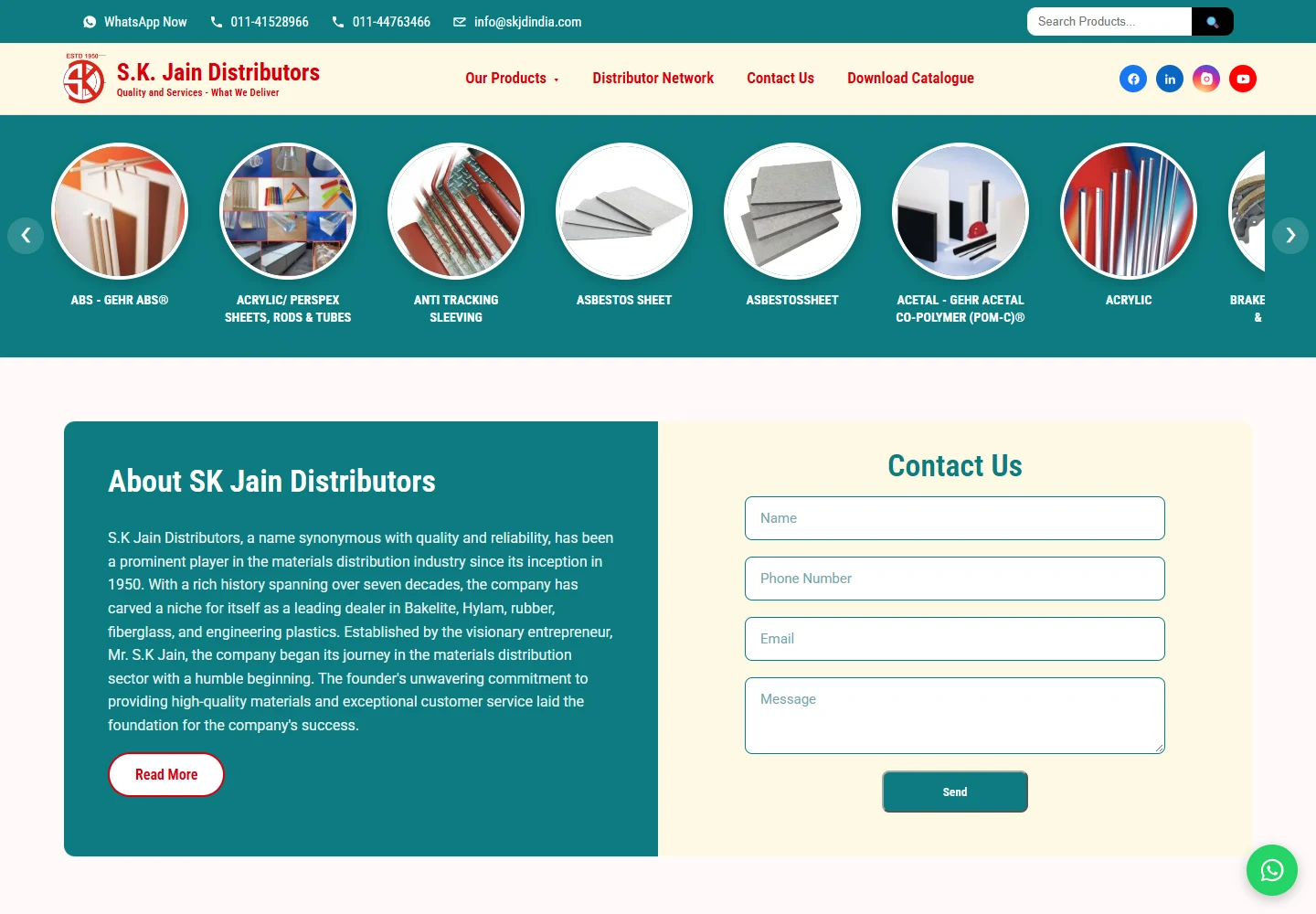
SK Jain Distributors presents industrial materials including bakelite and fibreglass epoxy sheets. The public website gives product collections a place alongside company information and industries served. This case study considers a catalogue-led B2B website, where a buyer needs to understand the range before discussing a specification or purchase.
Industrial material collections
Product-led B2B information
Business enquiry context
THE DETAILS THAT MATTER
From first impression to the next step.
01
Help a buyer find the relevant material
Industrial catalogue navigation should reflect how a buyer identifies a requirement. Product families and application context make different entry points into the range possible. The website presentation is a reference for that organisation, not an independent verification of material properties or suitability.
02
Bring business information into the product journey
A product-led website still needs to explain who supplies the materials and how to contact the business. Company context and contact access help connect browsing with a conversation. The exact enquiry or order-handling process should be assessed separately from the visual preview.
03
Use accurate data to scope an industrial website
Prepare approved product descriptions, dimensions, specification documents and representative photographs. Identify the information needed for a quotation and decide who maintains it. A structured catalogue may be more appropriate than an immediate checkout when price or suitability depends on the buyer’s requirements.
TURN THE REFERENCE INTO A BRIEF
A relevant example. Your own requirements.
Use this project to discuss presentation and customer journeys, then define the features, content and integrations your business actually needs. Compare our business website development scope, or explore website development in delhi if you are planning with our Delhi team.
This experience review uses EHUB’s portfolio captures and available public website information. Live websites can change. No project dates, technology stack, rankings or commercial results are inferred from screenshots.